
NEWS
LATEST MEWS
- 01Gain an understanding of the composition of injection molds
- 02Plastic mold processing principles and process requirements
- 03What types of injection molds are available for two-color injection molding machines?
- 04Introduction to Two-color Injection Molding Technology and Mold Characteristics
- 05Conditions for using hot runner in the manufacture of two-color molds
- 06Several commonly used structures in the two-color mold injection molding industry

Contact: Mr. Zhang
Mobile: 13692258992
Tel: 0755-29699631
Wangwang: zrpjk
QQ:996096558
E-mail: 13692258992@126.com
Address: Building 3, Hongxing Nan'an Industrial Zone, Songgang Town, Bao'an District, Shenzhen
Industry News
HomeIndustry NewsDetails
Gain an understanding of the composition of injection molds
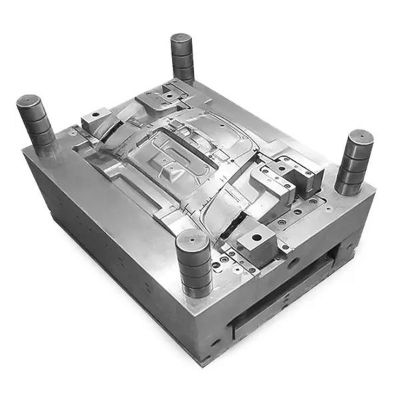
Publish: 2026-04-08 16:56:45 View: 754Although the structure of molds may vary greatly due to differences in plastic types and properties, the shape and structure of plastic products, and the type of injection molding machine, the basic structure remains consistent. Molds are primarily composed of a gating system, temperature control system, molding parts, and structural parts. The gating system and molding parts are the parts that come into direct contact with the plastic and vary with the plastic and product. They are the most complex and variable parts of the mold, requiring high machining smoothness and precision.
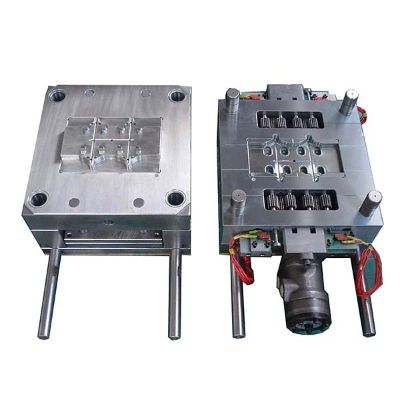
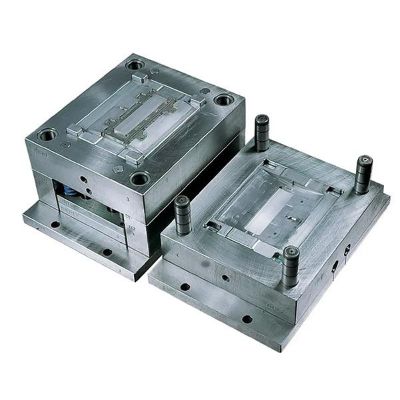
Injection molds are composed of a movable mold and a stationary mold. The movable mold is mounted on the moving platen of the injection molding machine, while the stationary mold is mounted on the fixed platen of the injection molding machine. During injection molding, the movable mold and the stationary mold close to form the gating system and the mold cavity. When the mold is opened, the movable mold and the stationary mold separate to facilitate the removal of plastic products. To reduce the heavy workload of mold design and manufacturing, most injection molds adopt standard mold bases.
Gating system
The gating system refers to the flow channel section of plastic before it enters the mold cavity from the nozzle, including the main runner, cold slug, branch runner, and gate, etc.
The gating system, also known as the runner system, is a set of feeding channels that direct the plastic melt from the nozzle of the injection machine to the mold cavity. It typically consists of a main runner, branch runners, gates, and cold slugs. It directly affects the molding quality and production efficiency of plastic products.
Main channel
It is a passage in the mold that connects the injection nozzle of the injection molding machine to the runner or the mold cavity. The top of the main runner is concave to facilitate connection with the nozzle. The inlet diameter of the main runner should be slightly larger than the nozzle diameter (0.8mm) to avoid overflow and prevent blockage due to misalignment. The inlet diameter depends on the size of the product and is generally 4-8mm. The diameter of the main runner should expand inward at an angle of 3° to 5° to facilitate the demolding of runner debris.
Cold material cavity
It is a cavity located at the end of the main runner, designed to capture the cold material generated between two injections at the tip of the nozzle, thereby preventing blockage of the sub-runner or gate. If the cold material were to mix into the mold cavity, it could easily induce internal stress in the molded product. The diameter of the cold material cavity is approximately 8-10mm, and its depth is 6mm. To facilitate demolding, its bottom is often supported by a demolding rod. The top of the demolding rod should be designed as a twisted hook shape or with a recessed groove, so that the remnants of the main runner can be smoothly pulled out during demolding.
"分流道"
It is the channel connecting the main runner and each cavity in a multi-cavity mold. To ensure that the melt fills each cavity at an equal speed, the arrangement of branch runners on the mold should be symmetrical and equidistant. The shape and size of the branch runner cross-section have an impact on the flow of plastic melt, the ease of product demolding, and the difficulty of mold manufacturing.
If we consider the flow of equal material quantity, the flow channel with a circular cross-section presents lower resistance. However, due to the smaller specific surface area of the cylindrical flow channel, it is not conducive to cooling the debris in the branch flow channel. Moreover, such a branch flow channel must be opened on both mold halves, which is both labor-intensive and difficult to align.
Therefore, trapezoidal or semi-circular cross-section runners are often used and are positioned on one half of the mold with a demolding rod. The surface of the runner must be polished to reduce flow resistance and provide a faster filling speed. The size of the runner depends on the type of plastic, the size, and thickness of the product. For most thermoplastics, the cross-sectional width of the runner does not exceed 8mm, with particularly large ones reaching 10-12mm and particularly small ones being 2-3mm. On the premise of meeting the needs, the cross-sectional area should be minimized to increase the burden on the runner and extend the cooling time.
Label: injection mold
Recommend